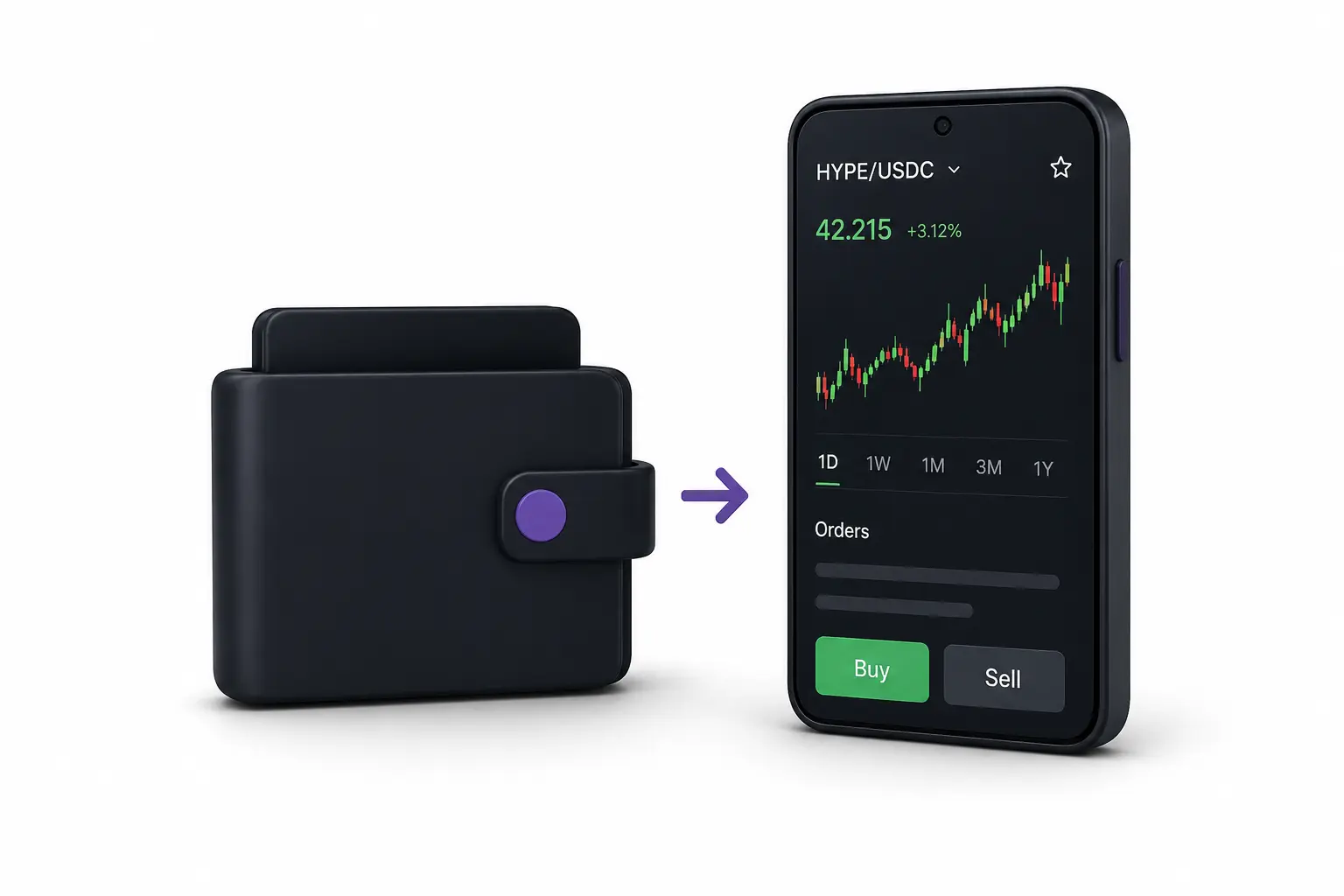
ACTION PATH · 10–15 MIN
Open your first small trade
Follow the fastest path from wallet connection to a live position. No prior experience needed.
Wallet
Deposit
First position
Best if you want to learn by doing.
Choose the right Hyperliquid guide for your intent: first trade, safety, no-KYC access, fees, Binance comparison, or core system mechanics.
Choose what you want to understand or do next.
Learn the full process from wallet to your first trade.
Understand custody, risks, and how funds are controlled.
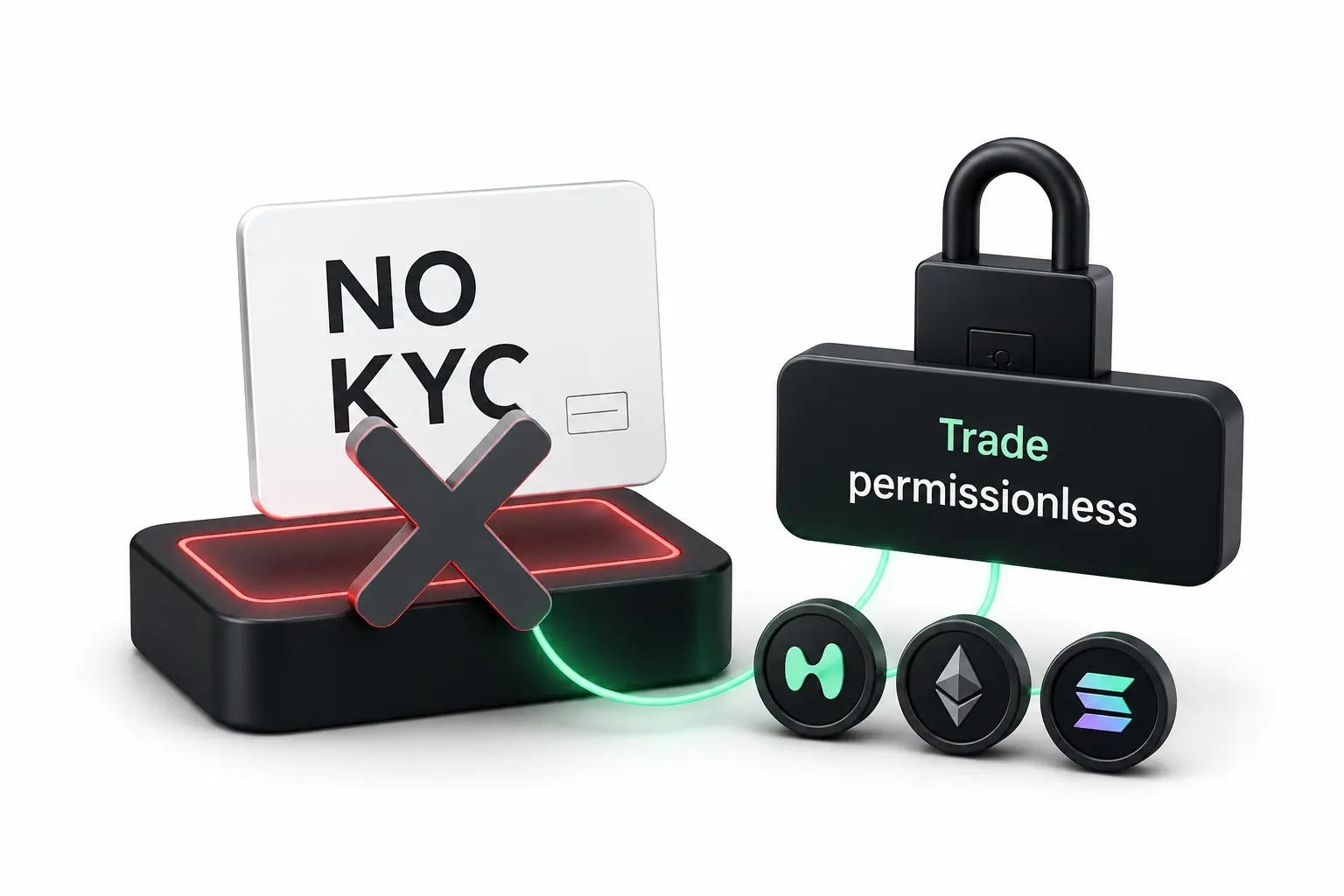
See how no-KYC trading works and what to expect.
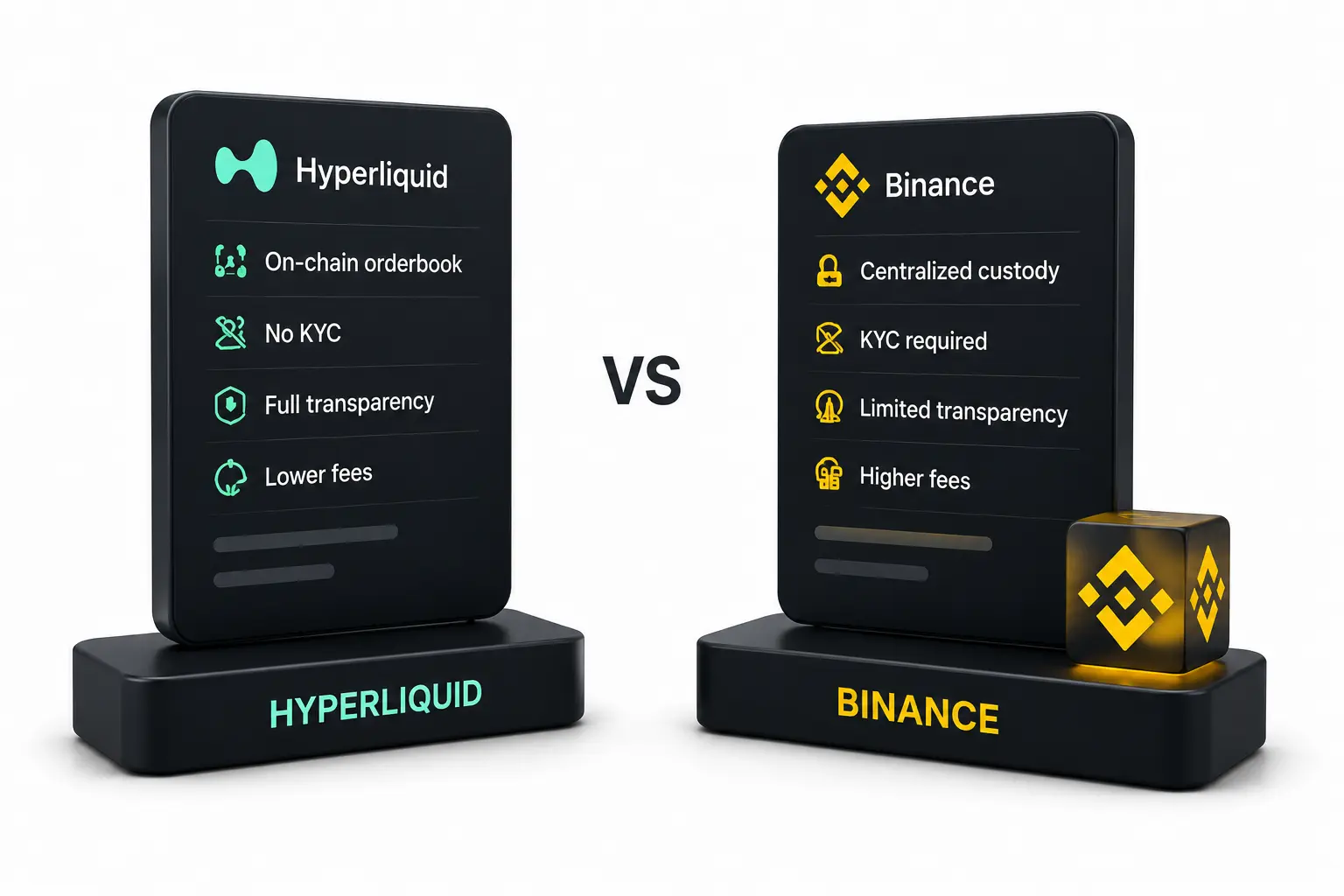
Key differences in custody, UX, and trading model.
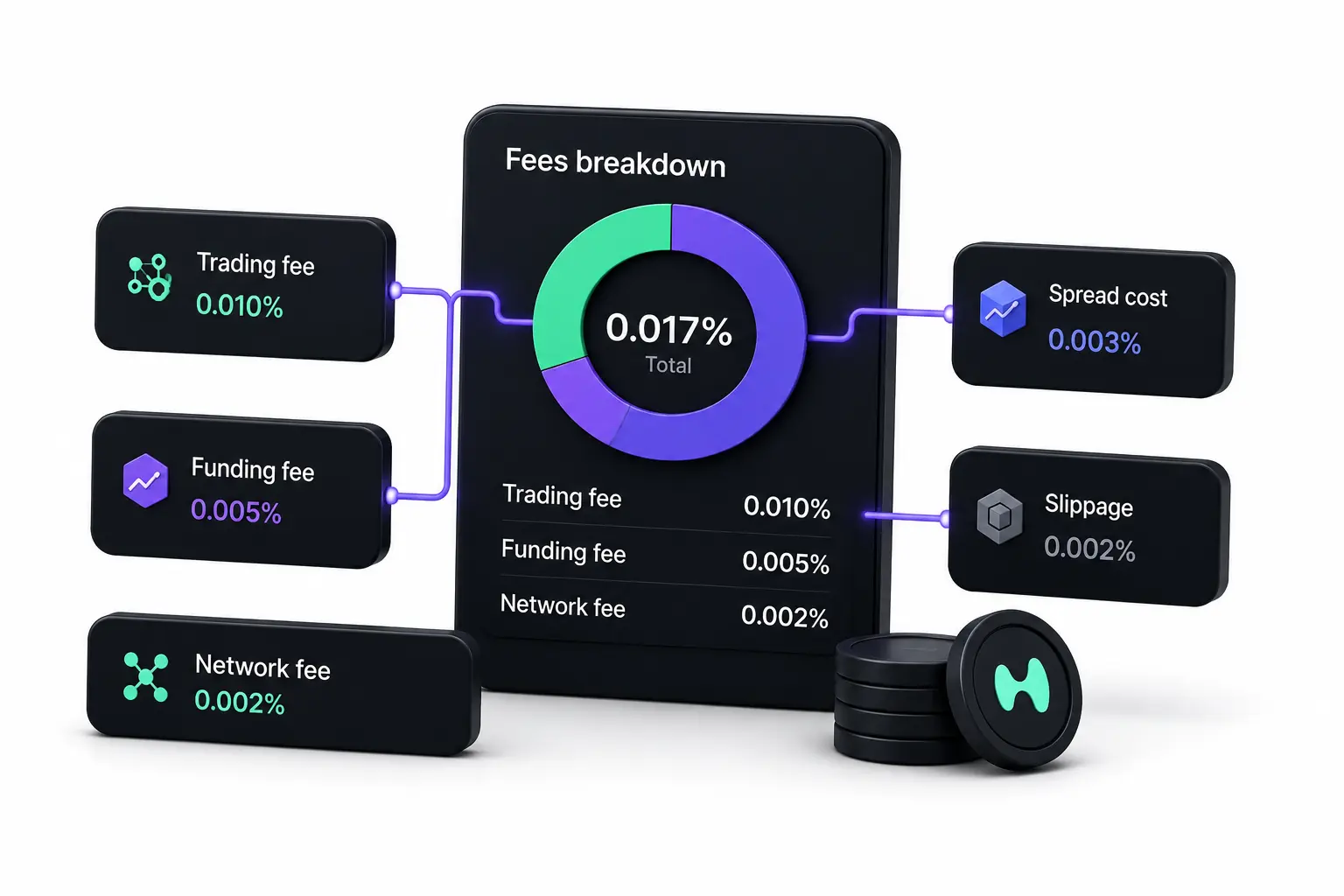
Breakdown of trading costs, funding, and hidden fees.
Not sure where to start? Our recommended path walks you through the essentials.
Take the recommended pathRECOMMENDED START
Start by doing a small first trade, or understand the system lifecycle before acting.
ACTION PATH · 10–15 MIN
Follow the fastest path from wallet connection to a live position. No prior experience needed.
Best if you want to learn by doing.
SYSTEM PATH · BEFORE TRADING
Follow the lifecycle first: how funds enter, how positions behave, and how risk is enforced.
Best if you want context before placing a trade.
Not sure where to start? Start with Quick Start using a small amount. Come back to the lifecycle after your first position.
Hyperliquid is a trading system where execution is defined by protocol rules, not an operator.
It combines an exchange and a blockchain into a single system, where trades, margin, and liquidation happen automatically — without custody or manual intervention.
Uses a central limit order book (CLOB), not a pricing curve
No custody, no account recovery, no discretionary support
The exchange and blockchain operate as one system

If this makes sense, you're ready to start.
Start Quick Start

See how trading works step-by-step.
 Connect a wallet and establish control over funds inside the system.
  Move assets into the trading environment so they can support positions.
  Submit your first trade and turn available collateral into active market exposure.
  Track how exposure, margin, and risk evolve while the position remains open.
  Close exposure and move funds back into full self-custody.
 Explore how the system works in more detail.

What this system is (and is not), and what expectations to discard.
How the L1 and the exchange fit together at the protocol level.

How a trade moves from submission to closure under protocol rules.
What you control, what you delegate, and why actions cannot be reversed.

The invariant that ends trades: thresholds, triggers, and forced closure.
Practical answers before your first real trade.
Open the practical path first. Come back to Core later for deeper understanding.